Why Samsung Galaxy Note 4 better than Galaxy Note 5

Samsung has launched its new flagship Samsung Galaxy Note 5 with 4 GB RAM. This is the successor of its previous Galaxy Note 4. Both Galaxy Note 5 & Note 4 are having amazing features and specifications at their price range. Are you not able to choose which is the best to buy? Do you want to compare Samsung Galaxy Note 5 vs Galaxy Note 4?

Don’t worry friends, for the sake of you people, today we have got a showdown of two of the finest high-end phones – The Samsung Galaxy Note 5 vs Galaxy Note 4. Here we are listing out differences between Samsung Galaxy Note 5 and Note 4. Let’s check out Samsung Galaxy Note 5 vs Galaxy Note 4 Comparison  and find out which one is the best for you.

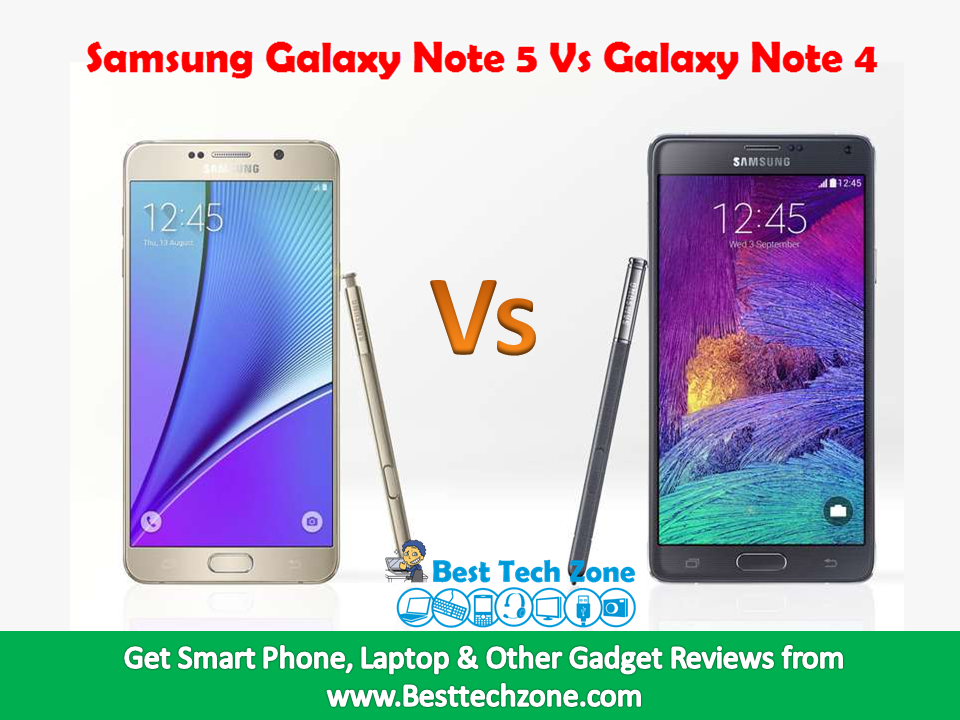
Samsung Galaxy Note 5 vs Galaxy Note 4

Design & Display

The Samsung Galaxy Note 5 is one of Samsung’s latest product that raises the bar with its gorgeous display and powerful processor. The device arrives with 5.7-inch large super AMOLED display with a screen resolution of 2,160 x 3,840 pixels whereas the Samsung Galaxy Note 4 amuses with a 5.7-inch multi-touch AMOLED display which flaunts a QHD or 2K (2,560 x 1,440 pixels) resolution. Galaxy Note 5  has Corning Gorilla glass that resists scratches, user marks and weighs 171g. The Galaxy Note 4 has been encased in a metallic body and bears a thickness of 8.5mm and weighs 176g.

Samsung Galaxy Note 5 vs Galaxy Note 4

Also See: Yu Yureka vs Xiaomi Redmi Note 4G

Platform and processor

Under the hood Samsung Galaxy Note 5 is powered by a 64-bit octa core Exynos 7420 SoC with four Cortex-A57 cores clocked at 2.1GHz, and four Cortex-A53 cores clocked at 1.5GHz and coupled with 4GB of LPDDR4 RAM whereas the Galaxy Note 4 is powered by Quad-core 1.3 GHz Cortex-A53 & Quad-core 1.9 GHz Cortex-A57 processor accompanied by an equally powerful 3GB RAM.

The Galaxy Note 5 runs on the latest version of Android OS, v5.1.1 (Lollipop) whereas the Galaxy Note 4 runs the Android v4.4 KitKat OS.

Camera and  Memory

The Galaxy Note 5 raises the bar with its outstanding 16MP camera that will delight the camera fanatics; however it disappoints a little with its 5MP front camera. The main features of the camera include Auto Flash, continuous shooting, optical image stabilisation, self-timer among others.

When coming to the Galaxy Note 4, it comes with a 16MP autofocus camera loaded with a range of software features including HDR, Dual Camera, Selective Focus, Shot etc. For selfie lovers, it is equipped with a 3.7MP front shooter with f1.9 aperture. The front camera can click better group selfies with an ultra-wide angle of 90 degrees.
Samsung Galaxy Note 5 vs Galaxy Note 4
The Galaxy Note 5 comes in 3 variants which are having internal memory of 32/64/128 GB and device has no microSD card slot.
The Galaxy Note 4 has two internal storage variants – 32GB and 64GB, both equipped with a microSD card slot for expansion up to 128GB.

Battery and connectivity

To keep the Galaxy Note 5 smartphone running, there is a 3,000mAh Lipo battery that gives a talk time of up to 20 hours on 3G. The phone covers almost all possible connectivity options including Wi-Fi and Bluetooth along with USB. The device is compatible with 4G and can be used as hotspot and OTA sync is also available for use.

The Galaxy Note 4 is fuelled by 3,220mAh li-ion battery with a fast-charging technology that can charge it to 50 percent within 30 minutes. The handset also features an Ultra Power Saving Mode to extend the battery life. In terms of connectivity, it has 4G LTE, NFC and IR Blaster in addition to the regular connectivity options. The device comes with a digital S pen to facilitate efficient use of the phablet while preparing official presentations and documents.

Also See: Lenovo K3 Note vs Lenovo A7000


PRICE
Rs. 50,000 (Expected) RS. 40,500
OS Android OS, v5.1.1 (Lollipop) Android OS, v4.4.4 (KitKat), upgradable to v5.0.1 (Lollipop)
CPU Quad-core 1.5 GHz Cortex-A53 & Quad-core 2.1 GHz Cortex-A57 Quad-core 1.3 GHz Cortex-A53 & Quad-core 1.9 GHz Cortex-A57
RAM 4 GB RAM 3 GB RAM
SCREEN 5.7 inches (~75.9% screen-to-body ratio) 5.7 inches (~74.2% screen-to-body ratio)
DISPLAY 1440 x 2560 pixels (~518 ppi pixel density) 1440 x 2560 pixels (~515 ppi pixel density)
SIM Single SIM Micro-SIM
CAMERA Rear Camera: 16 MP, Front Camera: 5 MP, LED Flash: Yes Rear Camera: 16 MP, Front Camera: 3.7 MP, LED Flash: Yes
MEMORY Internal Storage: 32/64/128 GB, microSD Expandable: No Internal Storage: 32 GB, microSD, Upto 128 GB
BATTERY Non-removable Li-Po 3000 mAh battery Li-Ion 3220 mAh battery
OTHERS  4G, 3G, Bluetooth, WiFi, GPS, NFC, USB 4G, 3G, Bluetooth, WiFi, GPS, NFC, USB


Conclusion

The Galaxy Note 5 display is almost the same as its predecessor, the battery is smaller (and isn’t removable) and it lacks microSD card support: these are big disappointments. The performance and camera specs are stronger, and the sleek design is undoubtedly more impressive, but the degree to which these aspects matter, in the grand scheme of things, may be negligible.

Samsung has definitely favored design over functionality with the new Note. If you want the latest, high-performance, attractive smartphone, the Note 5 will certainly, please. If the looks don’t sway you, maybe you’ll prefer last year’s lower-priced Note 4.

We’ll get the chance to fully test the S Pen functionality, battery life, and improved TouchWiz interface in our full review shortly to get a better look at how those aspects compare to the Note 4.

Also See: Moto G 3rd gen vs Moto G 2nd gen
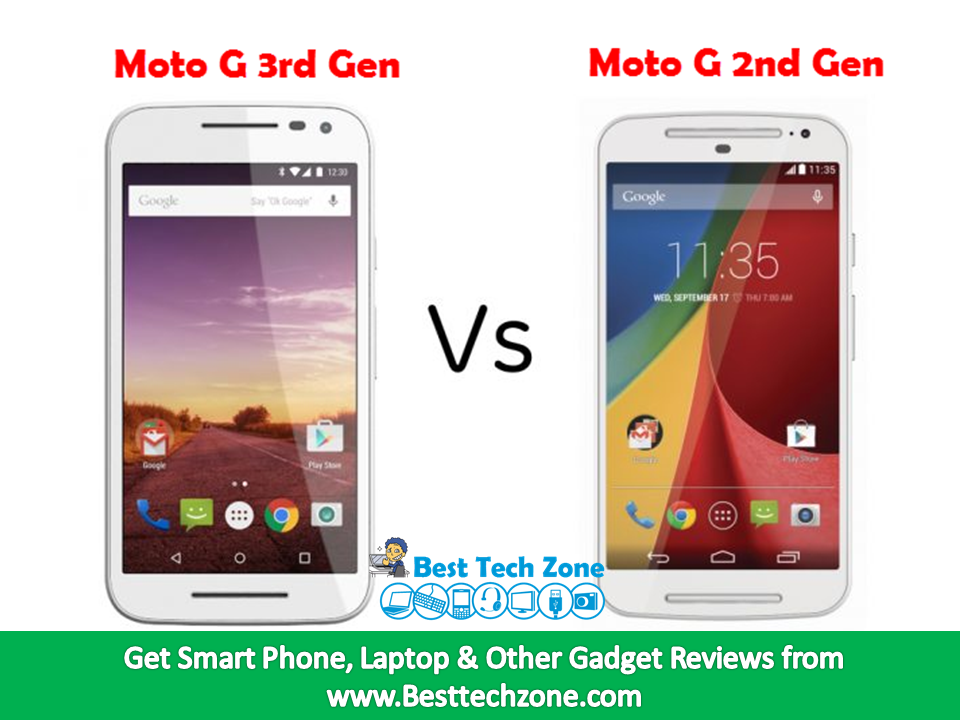
Moto G 3rd gen vs Moto G 2nd gen
Motorola had a lot of success with its ‘G’ range of phones. The first model really shook up the low-end market, packing in better specs than rivals for a similar price. Then the Moto G 2nd gen arrived and repeated the trick and it looks like the Moto G 3rd gen has done it all over again. Both are having amazing features and specifications at their price range. Are you not able to choose which is the best to buy? Do you want to compare Moto G 3rd gen vs Moto G 2nd gen?

Don’t worry friends, for the sake of you people, today we have got a showdown of two of the finest low-budget phones – The Moto G 3rd gen vs Moto G 2nd gen. Let’s check out Moto G 3rd gen vs Moto G 2nd gen Comparison  and find out which one is the best for you.

Moto G 3rd gen vs Moto G 2nd gen

Design

The Moto G 3rd gen has a plastic build, but its gently curved back leaves it looking aesthetically pleasing and makes it comfortable to hold. It’s also hugely customizable, as you can use Moto Maker to choose a front, back, trim and even an engraving. It’s water resistant too, so not only does it look fairly good but it can survive a splash.

The Moto G 2nd gen is not water resistant sadly but it does have a similar curved plastic design, which is similarly attractive and comfortable to hold. However unlike the Moto G 3rd gen it’s not customizable, with the whole phone coming in just black or white, so it’s far less distinctive.

Display

The Moto G 3rd gen and Moto G 2nd gen have essentially identical displays, with both packing 5.0-inch 720 x 1280 screens for a pixel density of 294 pixels per inch. It’s a shame that the screen wasn’t improved for the 3rd gen model but that’s still a reasonable size and resolution for a budget handset, so it’s one of the areas which was least in need of an overhaul.

Moto G 3rd gen vs Moto G 2nd gen
 

Also See: Yu Yureka vs Xiaomi Redmi Note 4G

Configuration & OS

Although both generations of the Moto G have quad-core processors the Moto G 3rd gen is the more powerful of the two, with a 1.4GHz quad-core Snapdragon 410 64-bit processor compared to the 1.2GHz quad-core Snapdragon 400 32-bit processor in the Moto G 2nd gen.

In other words the chip in the Moto G 3rd gen both has a higher clock speed and is 64-bit, further aiding its performance, especially when it comes to multitasking.

The Moto G 3rd gen also wins out on RAM, with 2GB if you opt for the 16GB model, though the 8GB version only has 1GB of RAM, the same as the Moto G 2nd gen.

The two phones run a similar version of Android, with the Moto G 3rd gen on Android 5.1.1 and the Moto G 2nd gen on Android 5.0.

Camera

The Moto G 3rd gen’s camera is a huge improvement on the 2nd gen model. It has a 13 MP snapper on the back with a dual-LED flash, while on the front there’s a 5 Mp lens. The Moto G 2nd gen on the other hand has just an 8 MP camera on the back with a single LED flash and a 2 MP one on the front, so both snappers are inferior to those on the 3rd gen model.

Moto G 3rd gen vs Moto G 2nd gen

That said they’re still pretty good for the money, it’s just that the Moto G 3rd gen really excels at photography given its price.

Battery, Storage & Connectivity

The Motorola Moto G 3rd gen has a 2,470 mAh battery designed to give all day battery life, even with fairly heavy use. However it’s still one you’ll tend to have to plug in before bed.

The Moto G 2nd gen has a smaller 2,070 mAh juice pack and while it should still see you through a day it won’t do so quite as comfortable as the 3rd gen model.

It also has less storage, with just 8GB, while the Moto G 3rd gen has a choice of 8 or 16GB built in, though both also have microSD card slots with support for cards of up to 32GB.

The two phones have similar connectivity options. Both support Wi-Fi, Bluetooth 4.0 and 3G and both also have 4G, though there’s also a 3G-only model of the Moto G 2nd gen.

Also See: Lenovo K3 Note vs Lenovo A7000


PRICE
Rs. 15,999 RS. 9,999
OS Android OS, v5.1.1 (Lollipop) Android OS, v4.4.4 (KitKat), upgradable to v5.0 (Lollipop)
CPU Quad-core 1.4 GHz Cortex-A53 Quad-core 1.2 GHz Cortex-A7
RAM 2 GB RAM 1 GB RAM
SCREEN 5.0 inches (~67.0% screen-to-body ratio) 5.0 inches (~68.9% screen-to-body ratio)
DISPLAY 720 x 1280 pixels (~294 ppi pixel density) 720 x 1280 pixels (~294 ppi pixel density)
SIM Micro-SIM Micro-SIM
CAMERA Rear Camera: 13 MP, Front Camera: 5 MP, LED Flash: Yes Rear Camera: 8 MP, Front Camera: 2 MP, LED Flash: Yes
MEMORY Internal Storage: 16GB, microsd expandable upto 32 GB Internal Storage: 8 GB, microSD, Upto 32 GB
BATTERY Non-removable Li-Ion 2470 mAh battery Non-removable Li-Ion 2070 mAh battery
OTHERS 4G, 3G, Bluetooth, WiFi, GPS, USB 3G, Bluetooth, WiFi, GPS


Conclusion

The Moto G 3rd gen is a clear improvement on the Moto G 2nd gen in a number of ways. The camera is vastly improved, the build is far more customizable and more durable too thanks to its water resistance. It’s also quite a bit more powerful, has more storage and a longer battery life than the Moto G 2nd gen.

Really the only thing that hasn’t changed is the screen and while that’s a shame it’s still got a pretty good display.

Of course there’s one negative change in the new model and that’s the price, because with a starting price of Rs.15999  it’s a little more expensive than the 2nd gen, which can now be picked up from around Rs.9999 SIM free. But with all the upgrades it more than justifies the price hike.

If you like the article Moto G 3rd gen vs Moto G 2nd gen “, you can share with your friends and feel free to ask doubts.

Also See: Asus Zenfone 2 vs Oneplus One 

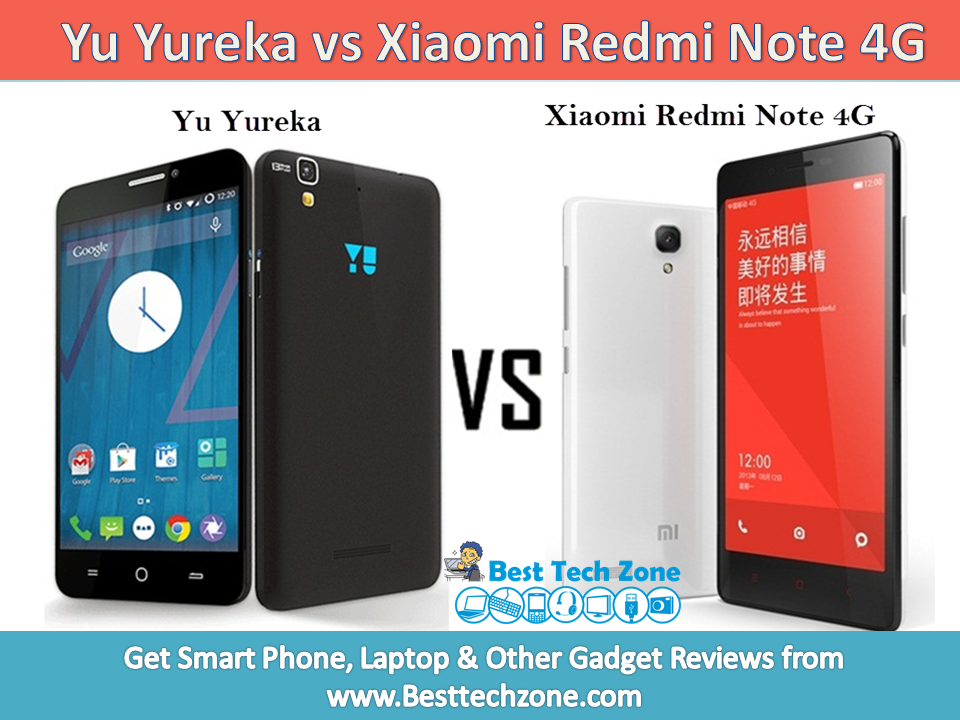
Yu Yureka vs Xiaomi Redmi Note 4G

We have now got many great low-budget smartphones and these low budget smartphones are tempting many customers to get confused in deciding which one they should buy. Micromax Yu Yureka and Xiaomi Redmi Note 4G are the new flagships at affordable price. Both are having amazing features and specifications at their price range. Are you not able to choose which is the best to buy? Do you want to compare Yu Yureka and Xiaomi Redmi Note 4G?

Don’t worry friends, for the sake of you people, today we have got a showdown of two of the finest low-budget phones – The Yu Yureka Vs Xiaomi Redmi Note 4G. Let’s check out Yu Yureka vs Xiaomi Redmi Note 4G Comparison  and find out which one is the best for you.

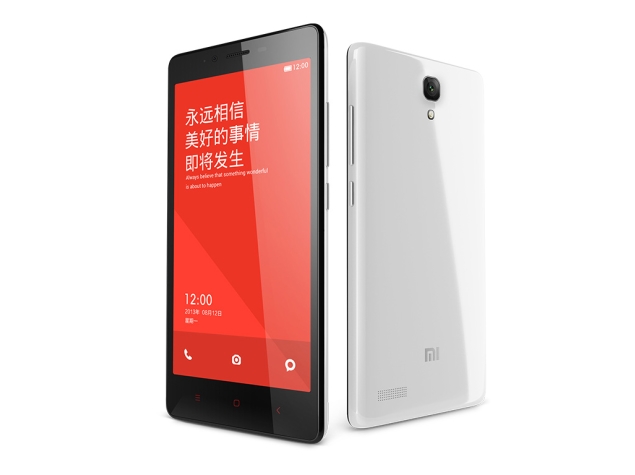
Yu Yureka vs Xiaomi Redmi Note 4G

Design & Display

The Micromax Yu Yureka flaunts a 5.5-inch IPS display with a pixel resolution of 720 x 1,280 at 267ppi. Micromax Yu Yureka with a dimension of 154.8 x 78mm is 8.5mm thick and weighs 155g.

The Xiaomi Redmi Note 4G shows off a 5.5-inch IPS LCD multi-touch display which lets you explore crisp visibility from extremely acute angles. The HD display supports a pixel density of 267 ppi to offer sharp yet delicate viewing experience. It carries an elegant appeal in its 9.5mm thick outfit.

Yu Yureka vs Xiaomi Redmi Note 4G

Also See: Xiaomi Mi 4i vs Asus Zenfone 2

Configuration & OS

The Yu Yureka is powered by a 64-bit octa-core (Quad-core 1.7 GHz Cortex-A53 & quad-core 1.0 GHz Cortex-A53 processor) based on a Qualcomm MSM8939 Snapdragon 615 chipset. It is coupled by a 2GB DDR3 RAM and Adreno 405 chipset GPU. Cyanogen OS 11 platform, a modified version of Android v4.4.4 KitKat OS has been inducted to facilitate an intuitive UI to the users.

Under the hood, Xiaomi Redmi Note 4G carries a mighty 1.6GHz quad-core CPU on Qualcomm MSM8928 Snapdragon 400 chipset under the hood. Paired with a 2GB RAM, this processor swiftly handles anything you throw at it. It runs Android v4.4.2 KitKat OS with MIUI v5.0 on top.

Camera & Memory

The Yu Yureka sports a 13-MP autofocus rear camera with Sony EXMOR CMOS sensor, LED flash and a 5MP front snapper providing the shutterbugs with decent quality images with good colour presence and an enriching selfie experience. It records 1080p videos at 30fps and 720p videos at 60fps. The camera also features a slo-mo video mode with 60 frames per second.

The device comes with an inbuilt memory of 16-GB and further allows increasing the memory up to 32GB by inserting a micro SD card.

Yu Yureka vs Xiaomi Redmi Note 4G

Also See: Asus Zenfone 2 vs Oneplus One

When coming to the Xiaomi Redmi Note 4G flaunts a 13 MP autofocus camera which reproduces high quality 1080p videos at 30fps thanks to features like touch to focus, face detection, LED flash, geo-tagging, smile detection and HDR. It sports an equally stunning 5MP front shooter.

The handset supports 8GB of internal memory expandable up to 64GB.

Battery & Connectivity

The Yu Yureka comes with a 2,500mAh Li-Po battery which acts as the substratum providing a standby time of 210 hours and a talk time of 8 hours. On the connectivity front the device is 3G enabled and also features other basic elements like Wi-Fi, GPS, and Bluetooth v4.0. The most exciting feature at this price range is the 4G connectivity as it also supports 4G LTE Cat4 networks ensuring hi-speed web browsing experience.

When coming to the Xiaomi redmi note 4G, it is packed with a 3,200mAh Li-Po battery. On the connectivity front, it supports 4G LTE, USB OTG, Mobile hotspot, GPS/AGPS, Wi-Fi Direct, Bluetooth v4.0 with A2DP, USB port and 3G.

Yu Yureka price in India is Rs.8,999

Xiaomi Redmi Note 4G price in India is Rs.7,999


PRICE
Rs. 8,999 @ RS. 7,999
OS Android OS, v4.4.4 (KitKat), upgradable to v5.0.2 (Lollipop) Android v4.4.2 (Kitkat)
CPU Quad-core 1.7 GHz Cortex-A53 & quad-core 1.0 GHz Cortex-A53 Quad-core 1.6 GHz Cortex-A7
RAM 2 GB RAM 2 GB RAM
SCREEN 5.5 inches (~69.1% screen-to-body ratio) 5.5 inches (~68.8% screen-to-body ratio)
DISPLAY 720 x 1280 pixels (~267 ppi pixel density) 720 x 1280 pixels (~ 267 PPI pixel density)
SIM Dual SIM (Micro-SIM, dual stand-by) SIngle SIM
CAMERA Rear Camera: 13 MP, Front Camera: 5 MP, LED Flash: Yes Rear Camera: 8 MP, Front Camera: 5 MP, LED Flash: Yes
MEMORY Internal Storage: 16GB, microsd expandable upto 32 GB Internal Storage: 8 GB, microSD, Upto 64 GB
BATTERY Li-Po 2500 mAh battery Li-Po 3100 mAh battery
OTHERS 4G, 3G, Bluetooth, WiFi, GPS, 4G,3G, Bluetooth, WiFi, GPS


Verdict

As we noted earlier, both the Yu Yureka and the RedMi Note are incredible devices for their price. But overall, we feel the Yu Yureka is a slightly better device, especially considering that it supports dual-SIM, comes with 16GB internal memory and a newer processor. The fact that it is also cheaper by Rs.1,000 makes it a better deal.

If you like the article Yu Yureka vs Xiaomi Redmi Note 4G “, you can share with your friends and feel free to ask doubts.

Lenovo K3 Note vs Lenovo A7000

We have now got many great low-budget smartphones and these low budget smartphones are tempting many customers to get confused in deciding which one they should buy. Lenovo k3 note and Lenovo A7000 are the new flagships of Lenovo smartphone manufacturing companies. Both are having amazing features and specifications at their price range. Are you not able to choose which is the best to buy? Do you want to compare Lenovo k3 note and Lenovo A7000?

Don’t worry friends, for the sake of you people, today we have got a showdown of two of the finest low-budget phones – The Lenovo k3 Note Vs Lenovo A7000. Let’s check out Lenovo k3 note vs Lenovo A7000 Comparison  and find out which one is the best for you.

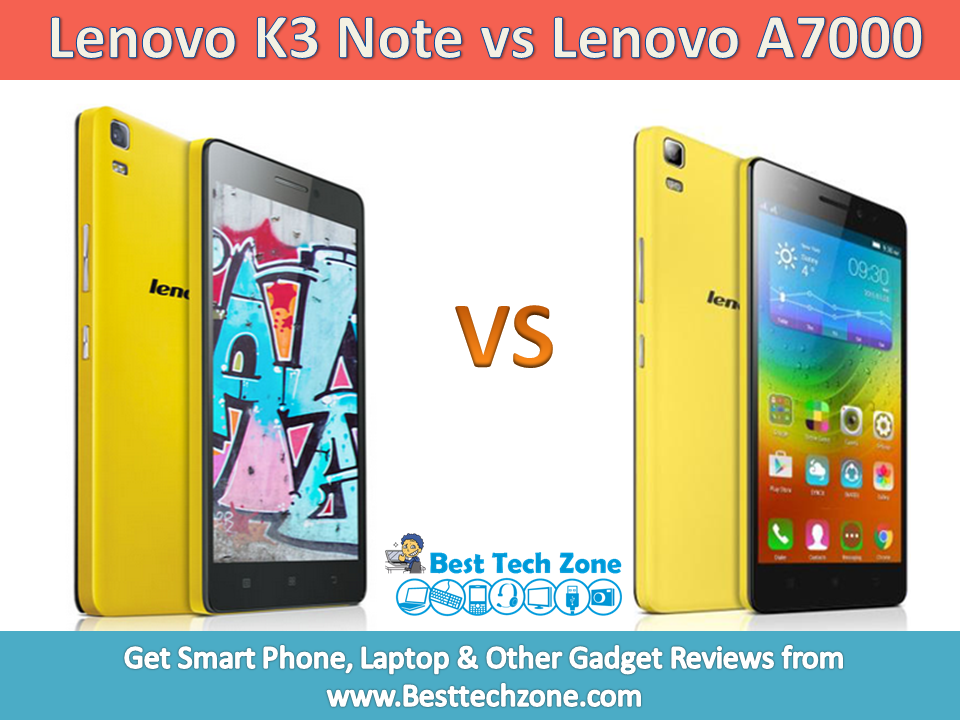
Lenovo K3 Note vs Lenovo A7000

Lenovo k3 Note release date in India: May 2015.

Lenovo A7000 release date in India: April 2015.

Display and Design

The Lenovo K3 Note flaunts a 5.5-inch IPS full HD multi-touch display which will surely leave your eyeballs mesmerized. Despite being so big, it has a waistline of just 7.9mm and a weight of 150g.

The Lenovo A7000 features a 5.5-inch IPS HD multi-touch display (720 x 1,280 pixels, 267ppi) in a 7.9mm thick outfit with a weight of 140g, which are very impressive figures considering its size.

Lenovo K3 Note vs Lenovo A7000


Also See: Asus Zenfone 2 vs Oneplus One

Configuration and OS

It sails on Lenovo Vibe 2.5 UI based on Android v5.0 Lollipop OS thereby offering access to Google’s latest apps and benefits. It drives its processes with a 1.7GHz octa-core Cortex A-53 processor based on 64-bit MediaTek MT6572 chipset. It is paired with 2GB RAM and Mali T760MP2 GPU thereby ensuring seamless and powerful performance.

When coming to the Lenovo A7000, the smartphone flaunts the latest Android v5.0 Lollipop OS, and driven by a 1.5GHz octa-core MediaTek MT6572M chipset along with 2GB RAM and Mali-T760 MP2 GPU.

Camera and Memory

The Lenovo K3 Note sports a 13MP autofocus rear camera with dual-LED flash, HDR, face detection, geo-tagging and panorama and the ability to record 1,080p videos at 30fps. For selfie crazies, there is a 5MP front snapper. It comes with 16GB of internal memory further expandable up to 32GB.
The Lenovo A7000 is armed with an 8MP autofocus snapper and LED flash at the back besides a 5MP wide angle front snapper. It features an internal memory of 8GB which is further expandable up to 32GB.
Lenovo K3 Note vs Lenovo A7000

Battery and Connectivity

The Lenovo K3 Note packs a 3,000mAh Li-ion battery rated to deliver up to 36h of talktime and up to 750h of standby time over 3G. Connectivity options include 4G LTE, 3G, Wi-Fi 5GHz, Bluetooth, GPS/A-GPS and USB port.
The Lenovo A7000 comes with a 2,900mAh Li-Po battery which is non-user removable. Connectivity options include 4G (selected markets), 3G, Wi-Fi, GPS/A-GPS, USB port and Bluetooth v4.0.
Lenovo k3 Note price in India is Rs.9,999
Lenovo A7000 price in India is Rs.8,999
PRICE Rs.9,999    Rs. 8,999  
OS Android OS, v5.0 (Lollipop) Android OS, v5.0 (Lollipop)
CPU Octa-core 1.7 GHz Cortex-A53 Octa-core 1.5 GHz Cortex-A53
RAM 2 GB RAM 2 GB RAM
SCREEN 5.5 inches (~71.7% screen-to-body ratio) 5.5 inches (~71.7% screen-to-body ratio)
DISPLAY 1080 x 1920 pixels (~401 ppi pixel density) 720 x 1280 pixels (~267 ppi pixel density)
SIM Dual SIM (Micro-SIM, dual stand-by) Dual SIM (Micro-SIM, dual stand-by)
CAMERA Rear Camera: 13 MP, Front camera :5 MP, Flash : Dual LED Flash Rear Camera: 8 MP, Front camera :5 MP,      LED Flash : Yes
MEMORY Internal: 16GB,  microSD, up to 32 GB Internal: 8 GB,  microSD, up to 32 GB
BATTERY Li-Po 3000 mAh battery Li-Po 2900 mAh battery
OTHERS 3G,4G,Wi-Fi, Bluetooth 4.0,GPS 3G,4G,Wi-Fi, Bluetooth 4.0,GPS


As these are both Lenovo phones you can expect that the build quality and after-sales service will be similar, and the designs also resemble each other. However, when solely looking at specs the K3 Note outshines the A7000 in just about every respect. The Lenovo K3 Note has a faster processor, higher display resolution, more built-in internal storage, superior camera capabilities, and a slightly higher battery capacity.

Verdict

By comparing all the Specifications and Features of Lenovo  k3 Note and Lenovo A7000, we had come to a conclusion that Lenovo K3 Note is worthable to buy when compared with LenovovA7000.

If you like the article  Lenovo K3 Note vs Lenovo A7000 “, you can share with your friends and feel free to ask doubts.

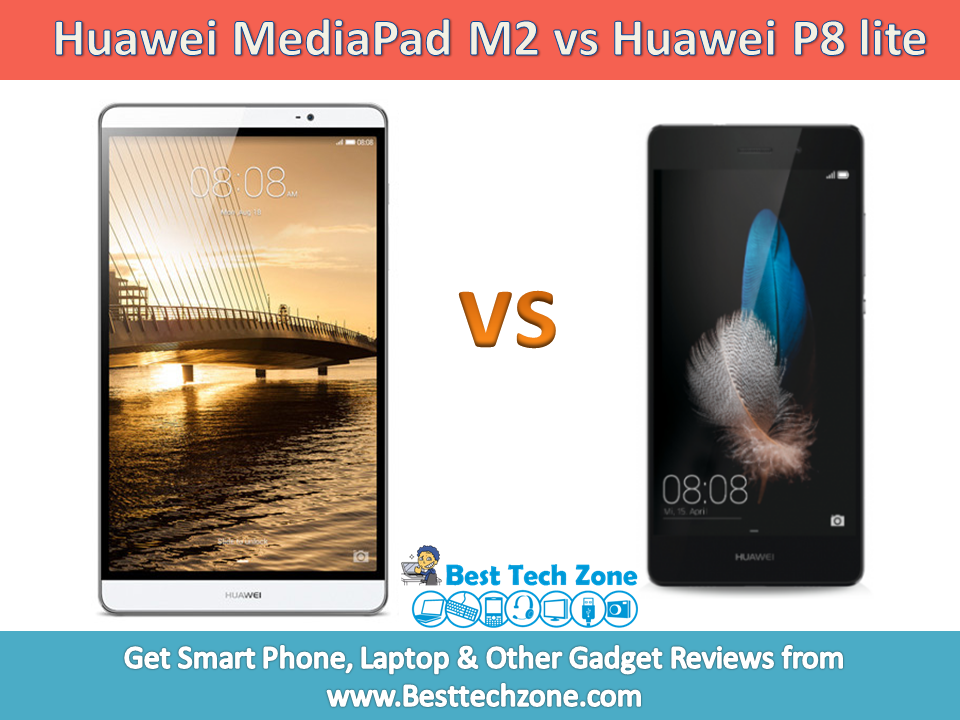
Huawei MediaPad M2 vs Huawei P8 lite

Huawei MediaPad M2 and Huawei P8 lite are the new flagships of Huawei smartphone manufacturing company. Both the tablet and smartphone are having amazing features and specifications at their price range. Are you not able to choose which is the best to buy? Do you want to compare Huawei MediaPad M2 vs Huawei P8 lite?

Don’t worry friends, for the sake of you people here we are giving detailed comparison Huawei MediaPad M2 vs Huawei P8 lite. Let’s check out Huawei MediaPad M2 vs Huawei P8 lite Comparison and find out which one is the best for you. Along with the comparison, we are also giving Huawei MediaPad M2 tablet review and Huawei P8 lite review for you.

Huawei MediaPad M2 vs Huawei P8 lite

Display and Design

The Huawei MediaPad M2 is being claimed as the world’s first 8-inch all metal 4G tablet by the manufacturer Huawei. The sleek compact tablet has an LCD screen with a resolution of 1,200 x 1,920 pixels. It has a thickness of 7.8 mm and a weight of 330g.

The Huawei P8 Lite features a 5-inch IPS HD multi-touch display running Google’s latest Android v5.0.2 Lollipop OS with Emotion 3.1 UI on the top. Despite sporting such a big screen, it has a waistline of just 7.7mm and more importantly weight of just 131g.

Huawei MediaPad M2 vs Huawei P8lite

Also See: Nokia Lumia 530 vs Intex Aqua Xtreme

Configuration

The system is powered by 2.0 GHzocta-core processor, paired with 3 GB RAM. The Tablet runs on latest Android OS, v5.1 (Lollipop).

When coming to the Huawei P8 Lite Smartphone, it is powered a 1.2GHz octa-core processor sitting on HiSilicon Kirin 620 chipset and 2GB RAM thereby ensuring powerful and silky smooth performance.

Camera and Memory

The Tablet continues to impress with its 8MP rear camera and 2MP front camera and records Full HD videos. The Huawei MediaPad houses an internal storage capacity of 32GB and can be expanded up to 128GB external memory which gives ample storage capacity to the consumers.

When coming to the Huawei P8 Lite comes with a 13MP autofocus camera which supports full HD video recording at 30fps along with presets like HDR, touch focus, dual LED flash, panorama, face/smile detection and geo-tagging. For selfies and video calling, there is a 5MP front snapper. It carries an internal memory of 16GB which is further expandable up to 128GB.

Huawei MediaPad M2 vs Huawei P8lite

Also See: Asus Zenfone 2 vs Oneplus One

Connectivity and Battery

The device offers all possibilities of connectivity from Wi-Fi to Bluetooth and is also compatible with 4G. The tablet is backed by a strong 4,800mAH Li-Po battery that lasts long enough to play movies and videos.

The Huawei P8 Lite is runs the show with a 2,200mAh Li-ion battery. On the connectivity front, we have options like 4G (specific regions), 3G, GLONASS, Wi-Fi, Bluetooth v4.1, USB port, Mobile hotspot and GPS/A-GPS.

Huawei MediaPad M2 8.0 price in India Rs. 24,999 (Expected).

Huawei P8 lite price in India Rs. 15,999 (Expected).

Huawei MediaPad M2 8.0 Tablet Specifications and Huawei P8 Lite specifications are given below.

PRICE RS. 24,999 (Expected)  Rs. 15,999 (Expected)
OS Android OS, v5.1 (Lollipop) Android OS, v4.4.4 (KitKat)
CPU Octa-core 2.0 GHz Quad-core 1.5 GHz Cortex-A53 & quad-core 1.0 GHz Cortex-A53
RAM 3 GB RAM 2 GB RAM
SCREEN 8.0 inches (~69.7% screen-to-body ratio) 5.0 inches (~68.7% screen-to-body ratio)
DISPLAY 1200 x 1920 pixels (~283 ppi pixel density) 720 x 1280 pixels (~294 ppi pixel density)
SIM Single SIM Dual SIM (Micro-SIM/Nano-SIM, dual stand-by)
CAMERA Primary Camera :8 MP, Front Camera: 2 MP, LED Flash: Yes Primary Camera :13 MP, Front Camera: 5 MP, LED Flash: Yes
MEMORY Internal Storage: 32 GB, microSD up to 128 GB Internal Storage: 16 GB, microSD up to 128 GB
BATTERY Non-removable Li-Po 4800 mAh battery Non-removable Li-Ion 2200 mAh battery
OTHERS 4G,3G, Bluetooth, Wi-Fi, GPS 4G, 3G, Bluetooth, Wi-Fi, GPS


verdict

At last few honest words, Huawei MediaPad M2 vs Huawei P8 lite Comparison saying that  both smartphones have hidden features according to their price range. Now it’s on you what you want.

If you like the article ” Huawei MediaPad M2 vs Huawei P8 lite “, you can share with your friends and feel free to ask doubts.

Also See: Xiaomi Mi 4i vs Asus Zenfone 2

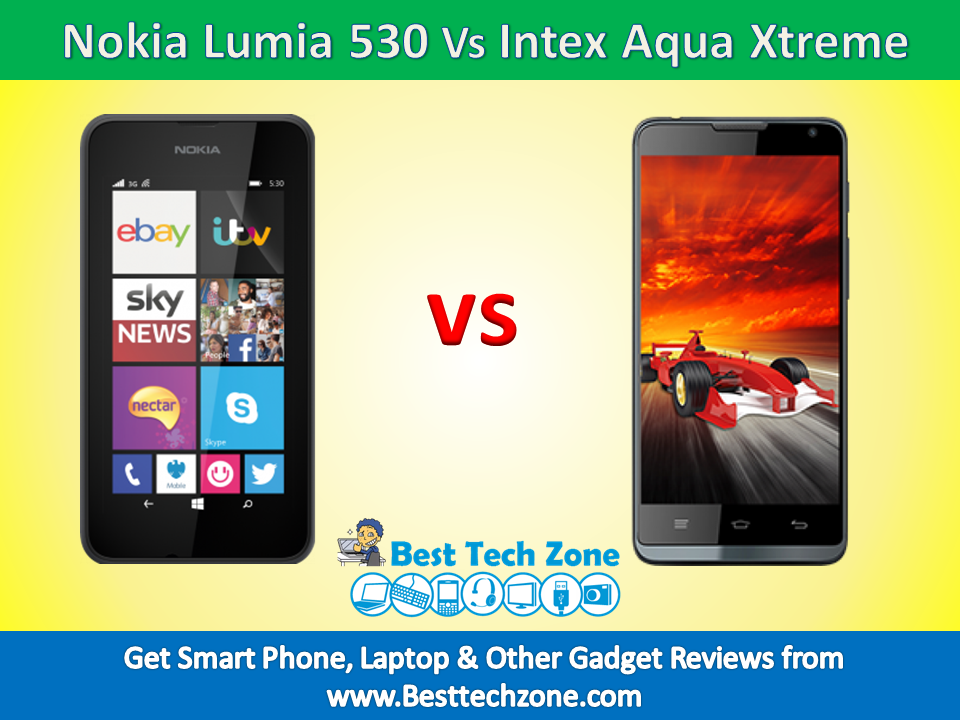
Nokia Lumia 530 vs Intex Aqua Xtreme

Nokia Lumia 530 and Intex Aqua Xtreme are the new flagships of Nokia and Intex smartphone manufacturing companies. Both are having amazing features and specifications at their price range. Are you not able to choose which is the best to buy? Do you want to compare Nokia Lumia 530 vs Intex Aqua Xtreme?

Don’t worry friends, for the sake of you people here we are giving detailed comparison of Nokia Lumia 530 vs Intex Aqua Xtreme. Let’s check out Nokia Lumia 530 vs Intex Aqua Xtreme Comparison  and find out which one is the best for you. Along with the comparison, we are also giving Nokia Lumia 530 review and Intex Aqua Xtreme review for you.

Nokia Lumia 530 vs Intex Aqua Xtreme

Display and Design

The Nokia Lumia 530 features a 4-inch TFT multi-touch display with FWVGA resolution of 480 x 854 pixels and a rich pixel density of 245 ppi. It has a thickness of 11.7mm and a weight of 129g with smoothly curved edges.
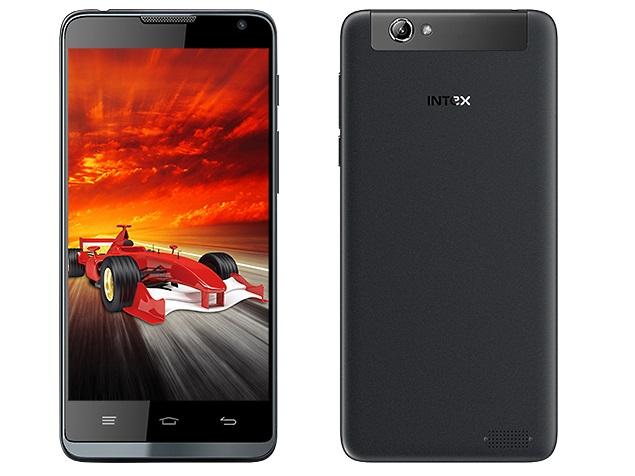
The Intex Aqua Xtreme sports 5-inch IPS LCD multi-touch display with HD resolution (720 x 1,280 pixels) and a pixel density of 294ppi. The Dragon trail glass protection ensures that the screen stays fresh forever. It has a thickness of 7 mm and a weight of 120g.
Nokia Lumia 530 vs Intex Aqua Xtreme

CPU and OS

Under the hood, Nokia Lumia530 is powered by a Qualcomm Snapdragon 200 chipset housing a quad-core processor clocked at 1.2GHz, paired with 512MB of RAM. For better management of graphics, it houses Adreno 302 GPU. The handset runs Windows 8.1 OS which is the latest one from Microsoft and brilliant for touch devices.
When coming to the Intex Aqua Xtreme, it carries a 1.7GHz octa-core MediaTek MT6592 chipset and 2GB RAM. Thus, it has the ability to handle powerful requirements smoothly. It ships with Android v4.4 KitKat OS upgradeable up to Android v5.0 Lollipop OS.

Camera and Storage

The Nokia Lumia 530 poses a brilliant 5MP snapper with a resolution of 2,592 x 1,936 pixels, a sensor size of 1/4-inch and capable of shooting 480p videos at 30fps. It is devoid of any front camera which could be a deal breaker if your requirements include video calling. While it comes with the standard onboard storage capacity of 4GB, the microSD slot can accommodate a maximum memory of 128GB.
The Intex Aqua Xtreme features a 13MP camera inclusive of LED flash at the back and a 5MP snapper on the front. For storage purpose it has a massive 32GB of internal memory which is further expandable via microSD slot.
Nokia Lumia 530 vs Intex Aqua Xtreme

Battery and Connectivity

The Nokia Lumia 530 draws the necessary fuel from a BL-5J 1,430mAh Li-ion battery which, according to the manufacturer, is capable of delivering up to 10 hours of talktime and up to 528 hours of standby time in 3G networks. From the connectivity point of view, this single SIM smartphone has features like 3G, Bluetooth v4.0 with A2DP, Wi-Fi, Mobile Hotspot, GPS/AGPS, GLONASS and USB port.
Keeping the Intex Aqua Xtreme juiced up is a non-removable 2,000mAh Li-Po battery. The networking and connectivity features loaded in the dual SIM phone include Wi-Fi, 3G, GPS, Bluetooth v4.0, USB port and GPRS/EDGE.
Nokia Lumia 530 price in India is Rs.4999, you can buy it in Flipkart.
Intex Aqua Xtreme price in India is Rs.11,485, You can buy it in Flipkart.
PRICE RS. 4,999  Rs. 11,485
OS Microsoft Windows Phone 8.1 Android v4.4.2 (Kitkat)
CPU Quad-core 1.2 GHz Octa-core 1.7 GHz
RAM 512 MB RAM 2 GB RAM
SCREEN 4.0 inches (~59.1% screen-to-body ratio) 5.0 inches (~68.7% screen-to-body ratio)
DISPLAY 480 x 854 pixels (~245 ppi pixel density) 720 x 1280 pixels (~294 ppi pixel density)
SIM Dual SIM Dual SIM
CAMERA Primary Camera :5 MP, Front Camera: No, LED Flash: No Primary Camera :13 MP, Front Camera: 5 MP, LED Flash: Yes
MEMORY Internal Storage: 4 GB, microSD up to 128 GB Internal Storage: 32 GB, microSD up to 32 GB
BATTERY Li-Ion 1430 mAh battery Li-Ion 2000 mAh battery
OTHERS 3G, Bluetooth, Wi-Fi, GPS 3G, Bluetooth, Wi-Fi, GPS


verdict

At last few honest words, Nokia Lumia 530 vs Intex Aqua Xtreme Comparison saying that  both smartphones have good features according to their price range. Now it’s on you what you want.

If you like the article ” Nokia Lumia 530 vs Intex Aqua Xtreme “, you can share with your friends and feel free to ask doubts.

Xiaomi Mi 4i VS Asus Zenfone 2

Xiaomi Mi 4i and Asus Zenfone 2  are the new flagships of Xiaomi and Asus smartphone manufacturing companies. Both are having amazing features and specifications at their price range. Are you not able to choose which is the best to buy? Do you want to compare Xiaomi Mi 4i vs Asus Zenfone 2?

Don’t worry friends, for the sake of you people here we are giving detailed comparison of Xiaomi Mi 4i and Asus Zenfone 2. Let’s check out Xiaomi Mi 4i vs Asus Zenfone 2 Comparison  and find out which one is the best for you.

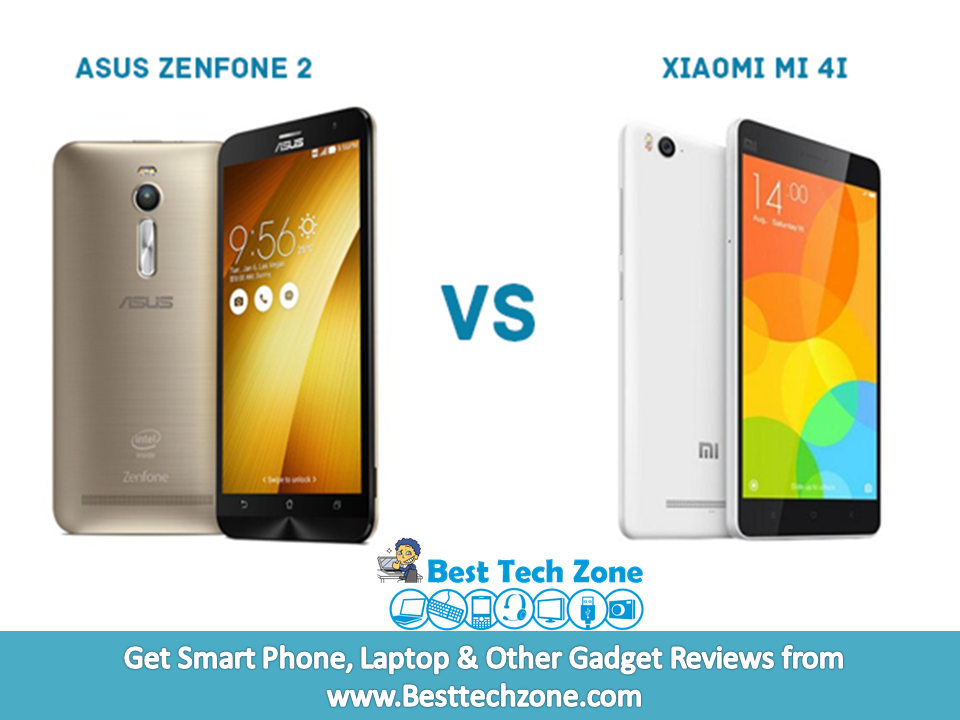
Xiaomi Mi 4i vs Asus Zenfone 2

Display

Asus Zenfone 2 (ZE551ML) incorporates a comparatively bigger 5.5in IPS display with capacitive touchscreen and is protected by the Gorilla Glass 3 screen protector. This display has resolutions of 1080 x 1920 pixels; along with pixel density of approximately 403 pixels per inch (ppi).

On the other hand, the Xiaomi Mi 4i comes with a comparatively smaller 5in display that has an identical (to Zenfone 2) 1080 x 1920 pixels and an almost similar 441 ppi pixel density.

Both the smartphones support multitouch and 16 million colours.

Xiaomi Mi 4i VS Asus Zenfone 2

From the above it is clearly evident that both smartphones draw level as far as providing a decent display is concerned. The Zenfone 2 does not get any brownie points just because it has a bigger display than the Mi 4i.

Hardware & OS

The Zenfone 2 is driven by a 2.3GHz quad-core Intel Atom processor that varies based on the RAM configuration (Zenfone 2 is available in both 2GB as well as 4GB RAM variants). The 2GB RAM edition incorporates a relatively inferior 1.8GHz quad-core Intel Atom processor. Asus Zenfone 2 running on Android 5.0 (with Asus ZenUI on top).

On the other hand, the Mi 4i has onboard 1.7GHZ quad-core Cortex A53 and 1.1 GHz Cortex A53 CPUs over a Qualcomm MSM8939 Qualcomm Snapdragon 615 SoC.  The Xiaomi Mi 4i is running on Android 5.0.2 (with MIUI 6.0 on top).

The Xiaomi Mi 4i emerges a clear winner as far as offering a decent computing experience is concerned by virtue of a combined octa-core processor experience over a superior SoC when compared to the Zenfone 2.

Camera

Asus’ Zenfone 2 features a 13MP rear camera that comes with dual-LED flash and supports geo-tagging of images. The camera supports shooting 1080p videos at 30 frames per second (fps). The handset also features a 5MP front camera.

On the other hand, Xiaomi’s Mi 4i also incorporates an identical 13MP camera that has dual-LED flash and supports geo-tagging of images. Like the Zenfone 2, the Mi 4i’s primary camera supports shooting 1080p videos at 30 fps. An identical 5MP camera also adorns the smartphone.

Xiaomi Mi 4i VS Asus Zenfone 2

Both the handsets should offer the selfie-generation lots to cheer about as far as their identical 5MP front cameras are concerned.

Storage

As discussed above, the Asus Zenfone 2 lets users choose between the 2GB and 4GB RAM variants, and also comes in three internal storage editions viz 16GB, 32GB and 64GB variants. The internal storage within 16GB and 32GB variants can be expanded up to 64GB with the help of an external MicroSD card slot.

However, Xiaomi’s Mi 4i is inferior in the memory aspect, as the handset comes in only a 2GB RAM variant that provides a fixed internal storage of 16GB. The smartphone does not support an external MicroSD card.

Therefore, the Zenfone 2 (ZE551ML), with its variety of memory options should offer people obsessed with storing movies and other multimedia content on their smartphones, plenty to cheer about.

Battery & Connectivity

The Zenfone 2 packs in a fixed 3,000 mAh Lithium-Polymer battery. Connectivity wise, it gets 4G LTE Cat4, 3G, Wi-Fi, GLONASS, Bluetooth v4.0, USB port, Mobile hotspot and GPS/A-GPS.

whereas the Xiaomi Mi 4i comes with a removable 3120 mAh Lithium-Ion battery. Connectivity and networking features come in the form of LTE, 3G, Wi-Fi, Bluetooth, GPS etc.

PRICE RS.12,999 RS.12,999  
OS Android OS, v5.0.2 (Lollipop) Android OS,v5.0 (Lollipop)
CPU Quad-core 1.7 GHz Cortex-A53 & quad-core 1.0 GHz Cortex-A53 Quad-core 1.8 GHz
RAM 2 GB RAM 2 GB RAM
SCREEN 5.0 inches (~71.7% screen-to-body ratio) 5.5 inches (~70.1% screen-to-body ratio)
DISPLAY 1080 x 1920 pixels (~441 ppi pixel density) 1080 x 1920 pixels (~403 ppi pixel density)
SIM Dual SIM (Micro-SIM, dual stand-by) Dual SIM (Micro-SIM, dual stand-by, dual call)
CAMERA Rear Camera: 13 MP, Front Camera: 5 MP, LED Flash: Yes Rear Camera: 13 MP, Front Camera: 5 MP, LED Flash: Yes
MEMORY Internal Storage 16 GB Internal Storage 32 GB, microSD Expandable Upto 64 GB
BATTERY Li-Ion 3120 mAh battery Non-removable Li-Po 3000 mAh battery
OTHERS 4G, 3G, Bluetooth, WiFi, GPS 4G,3G, Bluetooth, WiFi, GPS


verdict

At last few honest words, Xiaomi Mi 4i vs Asus Zenfone 2 Comparison saying that  both smartphone hidden tones of features according to their price range. Now it’s on you what you want.