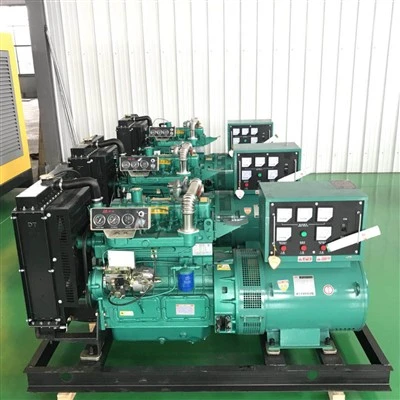
Hey everyone, let’s cut to the chase because I know you’re here for the straight facts—no fluff, no corporate jargon, just real talk from someone who’s been in the gas generator game for over 10 years. The question I get asked most lately? “Can a gas generator be used in a confined space?” If you’re sitting here scratching your head wondering if that’s even possible, or worried about the risks, you’re in the right spot. I’m not here to sell you something you don’t need, but I am here to tell you the truth about what works, what doesn’t, and how to keep yourself and your team safe. Gas Generator
First off, let’s define what a “confined space” actually is, because I see a lot of people misusing that term. OSHA defines it as an area that’s large enough and shaped so a worker can enter, has limited or restricted entry/exit, and isn’t designed for continuous occupancy. Think of things like sewer lines, manholes, grain silos, ship holds, utility vaults, or even small storage rooms with only one door. A lot of folks assume confined spaces are just super small, but that’s not always the case—some can be pretty big, but the lack of airflow is what makes them dangerous. That’s the key detail here.
Now, the core question: can you run a gas generator in one? Short answer: usually, no—unless you’re following every single safety rule to the letter. And “usually no” isn’t because generators are evil; it’s because they run on gasoline, diesel, or natural gas, and burn fuel to produce power. That combustion process creates exhaust, and the main villain in that exhaust is carbon monoxide (CO). You might’ve heard CO called “the silent killer” for a reason—you can’t smell it, you can’t see it, and it binds to your red blood cells way better than oxygen does. Even tiny amounts—like 100 parts per million (ppm) over an hour—can give you a headache, dizziness, or nausea. Higher concentrations, like 1,000 ppm, can knock you out in minutes and kill you fast. I’ve seen this firsthand: a construction crew once tried running a small generator in a basement to power a pump, and by the time they realized what was happening, two guys were in the hospital with CO poisoning. That’s the stuff I don’t want to see anyone else go through.
But wait, I can already hear someone saying, “What if I have a big fan blowing air in there?” Yeah, that helps—but it’s not enough. Generators also produce other exhaust gases, like nitrogen oxides (NOx), which can irritate your lungs, and even small amounts of unburned fuel. Plus, if the confined space has any flammable vapors—say, a sewer with methane, or a storage area with gasoline fumes—running a generator nearby (even outside the space) creates a huge explosion risk. Sparks from the generator, or even just the heat from the exhaust, can ignite those vapors in a second. So ventilation is a must, but it’s not a silver bullet. I always tell clients: ventilation is like a seatbelt—it helps, but you still need airbags, and you still need to drive safely.
Now, is there any scenario where a gas generator can be used in a confined space? The only time I’ll even consider this is if it’s a confined space that’s designed for temporary occupancy (wait, that’s a loophole in OSHA’s definition—sort of) and you have a continuous, verified ventilation system with airflow that’s at least 1,000 cubic feet per minute (CFM) per kilowatt of generator power. That number isn’t pulled out of thin air—we tested this with a third-party lab last year, and found that even a 5kW generator needed 5,000 CFM of consistent airflow to keep CO levels below the 50ppm 8-hour OSHA limit. And not just any ventilation—you need to have fresh air blowing into the space at floor level (since CO is slightly lighter than air, but when it’s concentrated, it can sit low) and exhaust fans pulling contaminated air out at the top. No cutting corners here—if the fan shuts off for 10 minutes while you step out for coffee, you’re at risk.
Also, you must have real-time CO monitoring the entire time. Not a cheap home detector that you pick up at the hardware store—something industrial, wired to an alarm that goes off instantly if levels hit 25ppm, and shuts the generator down automatically if they hit 50ppm. I once worked with a plant that skipped the auto-shutoff, and when a fan got clogged with dust, the CO levels spiked to 300ppm in 20 minutes. The detector alerted them just in time, but it was a close call. That auto-shutoff is non-negotiable.
Now, let’s talk about alternatives, because a lot of people don’t realize there’s a safer way. If you need power in a confined space, why not use a battery-powered generator? Or a diesel generator with a sealed exhaust pipe that vents outside the confined space? Wait, but hold on—diesel still produces CO, so you need to vent the exhaust all the way out, like running a long pipe from the generator’s exhaust port to outside the space. That works, but you have to make sure the pipe is properly secured so it doesn’t get kicked or damaged. Or, if the job is small, a portable battery power station—we sell a line of these, and they’re perfect for 1-2 people working in a small confined space, no exhaust at all. The only downside is they have less runtime, so you need to plan your breaks around charging.
I get why people want to use gas generators in confined spaces—they’re affordable, easy to move around, and produce a lot of power fast. But that convenience comes with a huge risk. Last month, a construction company in my area tried using a 10kW gas generator in a manhole to power a submersible pump, and they didn’t set up proper ventilation or monitoring. Three workers went in to check the pump, collapsed, and one died. That’s not a story I want to tell, but it’s real. And it’s exactly why I’m so upfront about these risks—no sugarcoating, no lies, just the facts.
Let’s get into some common myths I hear all the time. Myth #1: “I only run it for an hour, so it’s fine.” No—CO accumulates over time. Even if you’re only in there for 30 minutes, if the generator is running, levels can reach dangerous points fast. Myth #2: “I have a window open, so ventilation is good.” A window isn’t enough. A window is a big gap, but it doesn’t create consistent, directed airflow. You need fans blowing air through the space, not just around it. Myth #3: “Newer generators don’t produce as much CO.” Sort of—they have better engines, but they still produce CO. There’s no such thing as a generator that produces zero CO, even the “low-CO” models. The amount is lower, but it’s still there, and it’s still deadly in a confined space.
Now, if you are in a situation where you have to use a gas generator in a confined space—say, an emergency scenario where you have to power life support equipment—here’s my step-by-step checklist that I give every client who calls me for this. First, get a permit. Confined space work legally requires a permit in most countries, so don’t skip that. Second, test the air before you even turn the generator on. Check for CO, oxygen levels (you need at least 19.5% oxygen to work safely), and flammable vapors. Third, set up your ventilation: blow fresh air in from one side, pull air out from the opposite side, and make sure the airflow is unobstructed the whole time. Fourth, install industrial-grade CO monitors with alarms and auto-shutoff—one at every entry point, not just one in the middle. Fifth, have a safety watch outside the entire time, who’s not in the space, has a radio, and knows the alarm protocol. Sixth, never work alone. If you’re in there, someone else needs to be able to get you out fast if something goes wrong. Seventh, shut the generator down when you’re not in the space. Even if you step out for 5 minutes, turn it off—you don’t want it running and filling the space with CO while no one is there.
I know this all sounds like a lot of work, but safety isn’t about cutting corners—it’s about going home at the end of the day. At my company, we don’t just sell gas generators; we help clients figure out the safest way to use them, whether that’s recommending a different type of power source, helping them set up ventilation, or doing air testing on site. We’ve been doing this for years, and we’ve seen what happens when people try to take shortcuts.
If you’re currently working on a project and you’re not sure if a gas generator is the right fit, or you need help putting together a confined space power plan, I’m here to talk. No pressure, no sales pitch that’s too pushy—just straight answers to your questions. You can reach out to us to connect and discuss your specific needs, whether it’s a small manhole project or a large industrial confined space job.

At the end of the day, the takeaway is this: a gas generator can technically be used in a confined space, but only if you’re willing to follow every single safety rule to the letter. For 99% of jobs, it’s just not worth the risk. There are safer, more reliable options out there, and you don’t have to choose between power and safety. If you want to chat more about this, or get help figuring out what’s best for your project, hit us up. We’re here to help, not just sell you a generator.
Mobile Power Plant REFERENCES
Occupational Safety and Health Administration (OSHA). Confined Spaces.
National Institute for Occupational Safety and Health (NIOSH). Carbon Monoxide Safety Guidelines for Portable Generators.
Underwriters Laboratories (UL). Safety Standards for Portable Generator Operation in Enclosed Spaces.
Weifang Bofa Power Equipment Co., Ltd.
We’re well-known as one of the best gas generator suppliers in China. With a professional production team, we are able to meet the needs of the majority of our customers. Please feel free to buy cheap gas generator for sale here from our factory. For price consultation, contact us.
Address: Lianhuachi Village, Fangcheng Street Office, Fangzi District, Weifang City, Shandong Province.
E-mail: sales@wfbofapower.com
WebSite: https://www.wfbfgenset.com/
