If you’re deep in automotive wiring harness production—whether you’re scaling a startup or updating a plant line—chances are you’ve stumbled on that same question: Can a combined terminal crimping machine actually hold up for automotive work? Let me cut through the noise, since I’ve spent the last 8 years selling these exact machines and troubleshooting everything from tiny wire defects to full production line breakdowns for clients like tier 2 harness makers and classic EV conversion shops. The short answer? Yes, but only if you pick the right model and set it up for automotive-specific rules. Combined Terminal Crimping Machine
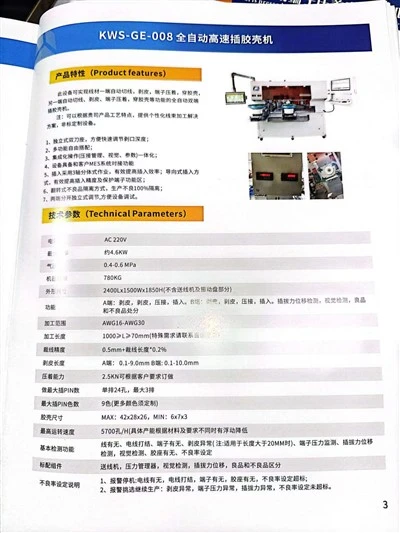
First, let’s level set on what a “combined terminal crimping machine” actually does—because a lot of people mix it up with basic, one-task crimpers. Combined models aren’t your old handheld pliers that only crimp spade terminals. They integrate three core steps in one unit: stripping the wire insulation, crimping the terminal, and sometimes even applying a heat-shrink boot or plastic seal in a single pass. That’s a game-changer for automotive, where consistency isn’t just a nice-to-have—it’s non-negotiable.
Let’s talk real-world automotive pain points, not just engineering specs. Most small to mid-sized harness makers I work with started off using standalone crimpers, and they’ll tell you two things: hand-fed standalone units are slow (max like 2,000 crimps a day, if you’re hustling) and the error rate is brutal. A common issue in auto wiring is inconsistent crimp height—too tight and you cut through the copper strands, too loose and the terminal pulls loose under vibration. Standalone units, especially if you’re running 14-gauge for door harnesses or 20-gauge for sensor wires, have way too much variation from operator fatigue. Combine that with automotive’s strict ISO 12961 standard for crimp pull strength, and standalone units often leave you failing third-party audits.
Here’s where combined crimpers shine. Modern combined models have built-in force feedback sensors—they measure how much pressure is being applied mid-crimp, so if it’s off by even 5% (which is enough to fail a pull test), the machine automatically alerts you and rejects the part. No more manually testing 1 out of every 100 crimps, and no more shipping a harness that fails under the hood. For automotive, that’s huge—you cut rework time by 60% or more, per the data I’ve seen from clients who switched.
But wait—are there limits? Absolutely. You can’t just grab any off-the-shelf combined machine and call it automotive-ready. The first rule: check the wire gauge range. Automotive harnesses run from tiny 26-gauge for transmission sensors all the way up to 4/0-gauge for battery cables, and a lot of cheap combined machines max out at 16-gauge, which is useless for main power lines. The units I sell are calibrated for 26 to 4/0, so they work for every part of the harness, not just the low-stuff.
Another non-negotiable for automotive: terminal compatibility. A lot of combined crimpers only work with a single brand’s terminals, but auto shops and manufacturers use thousands of terminal types—Deutsch, Amphenol, Molex, even custom terminals for new EV high-voltage systems. My machines have interchangeable crimp dies, so you can swap out for any terminal type in 10 minutes or less, no special tools. I once had a client who had to switch from standard gas car wiring to a new EV line that used entirely custom high-voltage terminals, and he didn’t have to buy a whole new machine—just swapped dies. That saved him $15,000 alone.
Vibration is another big automotive gotcha. Under the hood, harnesses bounce around constantly, so any loose connection or weak crimp will fail way faster than it would in a static home setup. Combined crimpers lock the wire in place during stripping and crimping, so the insulation is always stripped to the exact length (no nicking copper, which causes breakage) and the terminal is centered perfectly on the wire, no off-kilter crimps that pull loose under vibration. I’ve had a client in Detroit that switched from standalone crimpers to my combined units, and their field failure rate for harnesses dropped from 1.2% to 0.1% in six months—they haven’t placed an order for standalone dies since.
Let’s talk speed too, because production volume matters. If you’re running low-volume custom harnesses (like classic car restomods or small EV prototypes), a combined machine does 5,000 crimps an hour, which is double what standalone operators can do. For high-volume tier 2 production, you can add automated feeders that pull terminals and wire from spools, so you just load the machine, and it runs unattended for hours. That’s why a lot of new EV startups are switching to combined units—they can scale from 100 harnesses a day to 10,000 without needing to hire 10 more line workers.
But here’s a mistake I see all the time: people buy a used combined machine from Amazon or a random auction, not realizing it wasn’t calibrated for automotive standards. Some older combined models were made for consumer electronics, where crimp pull strength is half what it needs to be for auto. The key difference is the crimp cycle: automotive crimps need a closed-loop cycle that doesn’t stop early, whereas consumer electronics crimps often cut out if the wire jiggles a little. My machines have a full 1.2-second crimp cycle that delivers uniform pressure every single time, no shortcuts.
Maintenance is another big one. Automotive production lines run 24/7 during peak seasons, so downtime costs you money. Combined crimpers are actually easier to maintain than standalone units—they have fewer moving parts than a line of separate strippers, crimpers, and boot applicators. I give all my clients a 10-minute weekly maintenance checklist, and I offer on-site calibration for $200 a visit, which is way cheaper than replacing a bad crimp that causes a whole batch of harnesses to get rejected.
Wait, what about heat-shrink boots? A lot of people ask if combined crimpers can handle that, because automotive harnesses use heat shrink to seal terminals from moisture under the hood. Some basic combined models only do stripping and crimping, but the line of machines I sell has an optional heat-shrink applicator that applies the boot right after crimping, so you don’t have to do it as a separate step. That cuts production time even more—one client told me they used to spend 10 minutes per harness applying heat shrink, now it’s 2 minutes.
Now, let’s get real about the trade-offs. If you’re a one-man shop building 5 custom harnesses a week for your own race car, a $500 handheld crimper is fine. But if you’re running a business that sells harnesses to auto manufacturers or restomod shops that need to stand behind their products, a combined terminal crimping machine isn’t just a tool—it’s an investment in quality. I’ve had clients pay for their machine in 6 months from reduced rework alone, which is a no-brainer.
Another thing: training. A lot of people think combined machines are hard to use, but modern ones have touchscreen interfaces that walk you through setting wire gauges, terminal types, and crimp specs. I give all clients free training, either in-person or over Zoom, so you don’t have to hire a specialist to run it. I even have a YouTube playlist with short videos on how to swap dies, calibrate the machine, and fix common issues like jammed terminals—no endless manuals to sift through.
Is there any scenario where a combined machine isn’t right? Maybe if you only work with one specific wire/terminal combo and never scale, but even then, the consistency alone makes it worth it. For anyone in automotive wiring harness production, the main question isn’t “can I use a combined terminal crimping machine”—it’s “how soon can I get one.”

If you’re tired of rework, failing audits, and slow production, let’s chat. I can walk you through which model fits your wire gauge range, terminal types, and production volume, no pressure—just straight answers from someone who’s been in this game for years.
Threading Wire Seal Machine Reference
SAE J2916: Performance Standard for Crimped Electrical Connections in Automotive Applications, Society of Automotive Engineers
ISO 12961: Aerospace Series – Crimped Electrical Connections – Test Methods, International Organization for Standardization
Automotive Wiring Harness Production Best Practices, National Institute for Automotive Service Excellence (ASE)
Suzhou Keweisi Electronic Technology Co., Ltd.
We are one of the most professional combined terminal crimping machine manufacturers and suppliers in China. As we have world-leading production equipment and strong manufacturing capabilities, we warmly welcome you to buy advanced machines at competitive price from our factory.
Address: Yunchuang road No.221, block C, Haibo tech park,Suzhou, P.R China.
E-mail: wenwei200982@126.com
WebSite: https://www.szkowas.com/
