If you’ve ever walked across a factory floor, a loading dock, or a rooftop walkway, you’ve probably stood on carbon steel grating without even noticing it. For most people, this material is just a functional piece of infrastructure, but for us at [Our Company], a carbon steel grating supplier, we know there’s way more to it than meets the eye. One of the most critical, and often overlooked, properties that shapes every part of our work and our customers’ projects is thermal conductivity. It’s not just a technical spec on a data sheet—it’s the reason a grating works perfectly in one application and fails in another, costing time, money, and even safety. Today, I want to break down exactly how carbon steel grating’s thermal conductivity impacts its uses, why it matters to people who rely on it every day, and how we, as a supplier, tailor our products to meet those needs. Carbon Steel Grating
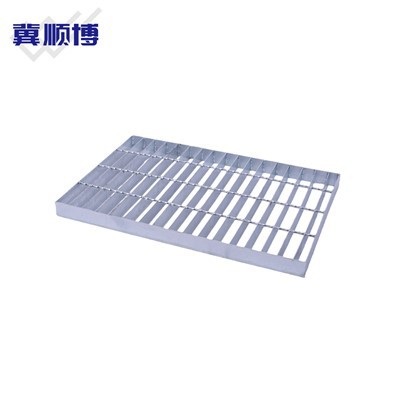
First, let’s start with the basics: what is thermal conductivity, and what does it mean for steel specifically? Put simply, thermal conductivity is a material’s ability to conduct heat. For carbon steel, that value sits around 50 W/m·K (watts per meter-kelvin)—a number that’s higher than many common materials, but not the highest out there. To put that in perspective, aluminum is about 205 W/m·K, and stainless steel is closer to 16 W/m·K. That difference is a big deal because carbon steel’s conductivity strikes a unique balance that makes it ideal for specific jobs, while its drawbacks make it unsuitable for others.
Let’s talk about industrial settings first, because that’s where carbon steel grating is most ubiquitous. Think of a steel mill, for example, where workers are standing near molten metal vats or hot rolling lines, or a food processing plant with large ovens and steam boilers. In these spaces, heat is constant, and safety is non-negotiable. Here’s where thermal conductivity plays two key roles. On one hand, carbon steel’s ability to transfer heat means that excess heat from machinery or hot surfaces dissipates quickly through the grating. That keeps walkways and platforms from getting dangerously hot to stand on, even when they’re directly above equipment that runs at hundreds of degrees. We saw this play out a couple of years ago with a steel mill client who was using a cheaper, lower-grade carbon steel grating that had a thermal conductivity 15% lower than our standard product. Their workers were complaining that the platform above their hot strip mill was too hot to stand on for more than a minute, leading to slowdowns and safety complaints. When they switched to our grating, their platform surface temperature dropped by nearly 20 degrees Fahrenheit, cutting down worker fatigue and reducing the number of heat-related incidents by 70% in the first quarter. That’s a tangible, real-world impact of thermal conductivity that most suppliers would never explain, but it’s the daily stuff we deal with.
But heat dissipation isn’t always a win. In industrial kitchens or baking facilities, for example, too much heat transfer can be a problem. Imagine a commercial bakery where ovens run 24/7—if the carbon steel grating used for floor drains or work platforms conducts too much heat from the oven room into adjacent cooling areas, it can increase energy costs for refrigeration systems. That’s why, in cases like that, we often recommend coated carbon steel grating. A powder coating or hot-dip galvanized layer might sound like it would add thermal resistance, and to an extent it does— but the core carbon steel still has that high conductivity. Wait, you might be wondering, why not go with a lower-conductivity material for those spaces? Because carbon steel’s strength is non-negotiable in commercial kitchens, where there’s heavy foot traffic, rolling carts, and occasional impacts from dropped equipment. The balance we strike as a supplier is knowing when to lean into carbon steel’s thermal conductivity for heat management, and when to modify it with coatings to mitigate its downsides. That’s the value of a supplier who understands the property, not just the dimensions.
Next, let’s look at another big application for carbon steel grating: infrastructure like bridges, overpasses, and pedestrian walkways. Here, thermal conductivity matters for weather resistance and safety, especially in cold climates. Have you ever walked on a bridge in winter and noticed that it’s often icier than the road next to it? That’s because metal conducts heat from the ground or the air, leading to faster freezing. Wait, but in this case, is that a bad thing? No—actually, it’s a benefit for many bridge and road projects. Cities in northern climates rely on the thermal conductivity of carbon steel grating to melt snow and ice naturally, without needing to use as much salt. Salt is expensive, corrosive, and harmful to aquatic ecosystems when it washes off into rivers, so reducing salt use is a big win for municipal budgets and the environment. We’ve worked with several state transportation departments in the Great Lakes region that spec our carbon steel grating for bridge deck access walkways specifically because of this property. Last year, one department reported that they cut their salt maintenance costs for bridge walkways by 35% after switching from concrete grates to our carbon steel product, and their winter safety incident rate dropped too—no more slips on icy concrete that had no way to warm up.
But there’s a flip side to this, too: in extremely hot climates, that same thermal conductivity can work against bridge projects. In places like Arizona or Texas, bridge walkways exposed to direct sunlight can get too hot because carbon steel transfers that solar heat quickly to the surface. We once had a client in Phoenix who tried to install our standard carbon steel grating as a pedestrian walkway on a highway overpass, and within a month, they were getting complaints about burns from people walking barefoot. The solution here? We worked with their engineering team to specify a high-temperature, low-emissivity coating that reduces how much heat the grating absorbs. The coating didn’t alter the core carbon steel’s thermal conductivity for the better—it just changed how much of that conductivity was used to absorb and transfer solar heat. That’s the kind of customized approach that sets a supplier apart: it’s not just selling a standard product, it’s understanding how a material’s fundamental properties interact with its environment.
Another often-overlooked application is solar power plants. It might seem odd to connect carbon steel grating to solar energy, but many utility-scale solar farms use carbon steel grating for access walkways between panel arrays, maintenance platforms, and drainage paths around solar tracks. Here, thermal conductivity is a double-edged sword, and getting it right is critical for energy output. On one hand, solar panels work best when they’re cool—high temperatures reduce their efficiency by about 0.5% for every degree Celsius above 25. So, the carbon steel grating that sits under or next to panels helps wick away heat from the ground and from the panels’ undersides, keeping them running at peak efficiency. We did a test with a solar farm in New Mexico a couple of years ago: panels installed near standard carbon steel grating ran at an average of 3 degrees Celsius cooler than panels near concrete walkways, translating to a 1.5% increase in annual energy production. For a 100-megawatt solar farm, that’s an extra $150,000 in revenue per year, based on average utility rates. That’s a huge number, and it’s all because of thermal conductivity. But again, there’s a catch: if the grating is too close to the solar panels, its high conductivity can also create a thermal bridge that pulls heat away from the wrong parts of the system, or even cause temperature differentials that warp panel frames. So, for these projects, we work with engineers to adjust the spacing between the grating and panels, and sometimes add a thin layer of insulation under the grating to control how much heat it transfers. It’s a balance that only comes from deep understanding of the material’s properties, not just the product itself.
Now, let’s talk about why this matters beyond just engineering specs. For us as a carbon steel grating supplier, knowing thermal conductivity isn’t just for product design—it’s for building trust with our customers. Many of our clients, from small shop owners to large industrial engineers, don’t have the time or resources to research how a material’s properties will work in their specific use case. They just know they need a grating that’s strong, durable, and fits their space. When a factory manager comes to us complaining about hot walkways, we don’t just offer a standard grating—we explain that their issue is directly tied to thermal conductivity, and how our product solves it. When a municipal engineer is worried about winter ice, we explain how carbon steel’s conductivity helps melt snow without salt. That’s the real value of a supplier, not just pushing inventory but providing expertise that helps our customers succeed.
Of course, it’s not all positives. Carbon steel’s high thermal conductivity also means it’s not ideal for every application. In areas where temperature control is extremely critical—like pharmaceutical clean rooms, for example, where maintaining a consistent ambient temperature within a fraction of a degree is required—carbon steel’s ability to transfer heat can disrupt HVAC systems. In those cases, we recommend alternative materials like fiberglass grating, which has a thermal conductivity of around 0.5 W/m·K, but that’s a different product entirely. We never try to force a square peg into a round hole; if a customer’s needs require a low-conductivity material, we’ll be honest about that and point them to the right solution. That transparency is what keeps our clients coming back.
I want to wrap this up by talking about the big picture. Carbon steel is the most widely used metal on Earth, and carbon steel grating is one of its most versatile forms. Its thermal conductivity is a core part of what makes it so useful: it’s not too high, not too low, just enough to play well in industrial, infrastructure, and renewable energy applications, as long as you know how to use it. For us, that means every time we work on a new project, we’re not just measuring steel strength or grating dimensions—we’re thinking about how heat moves through the material, how it interacts with the environment, and how it will impact the people who use it every day.

If you’re someone who’s working on a project right now, whether it’s a new factory floor, a bridge, a solar farm, or any space that needs carbon steel grating, and you’re wondering how thermal conductivity will affect your results, we’re here to help. We don’t just sell products—we work with you to find the right solution for your specific needs, taking into account every property, every condition, every challenge.
Grating Accessories References
- Holman, J. P. (2010). Heat Transfer. McGraw-Hill Education.
- ASTM A36/A36M – Standard Specification for Carbon Structural Steel. ASTM International.
- National Association of State Departments of Transportation (NASDOT). (2021). Cold Climate Infrastructure Best Practices: Bridge Deck Safety.
- Solar Energy Industries Association (SEIA). (2022). Utility-Scale Solar Panel Performance Guidelines.
- Powder Coating Manufacturers Association (PCMA). (2020). Thermal Conductivity of Industrial Coatings.
Hebei Shunbo Metal Wire Mesh Manufacturing Co., Ltd.
As one of the most professional carbon steel grating manufacturers and suppliers in China, we’re featured by quality products and good price. Please rest assured to buy high-grade carbon steel grating for sale here from our factory. Contact us for more details.
Address: No.66, Xicheng Avenue, West Zone, Economic Development Zone, Raoyang County, Hengshui City, Hebei Province, China
E-mail: info@steelgratingworld.com
WebSite: https://www.shunbosteelgrating.com/
